


Choosing Chairs? Selecting Stools?
Choosing chairs and stools sounds simple until you’re comparing seat heights, timber tones, fabric durability and whether anyone will actually sit there for more than ten minutes.
In a well-designed home, seating does more than fill a gap. It shapes how the kitchen, dining and living areas feel day to day. For many of our Northern Beaches clients, the right chairs and stools need to handle breakfast, homework, working from home, casual dinners and Saturday drinks without making the room feel busy.
Here’s how to choose seating that feels comfortable, looks considered and holds up to real life.
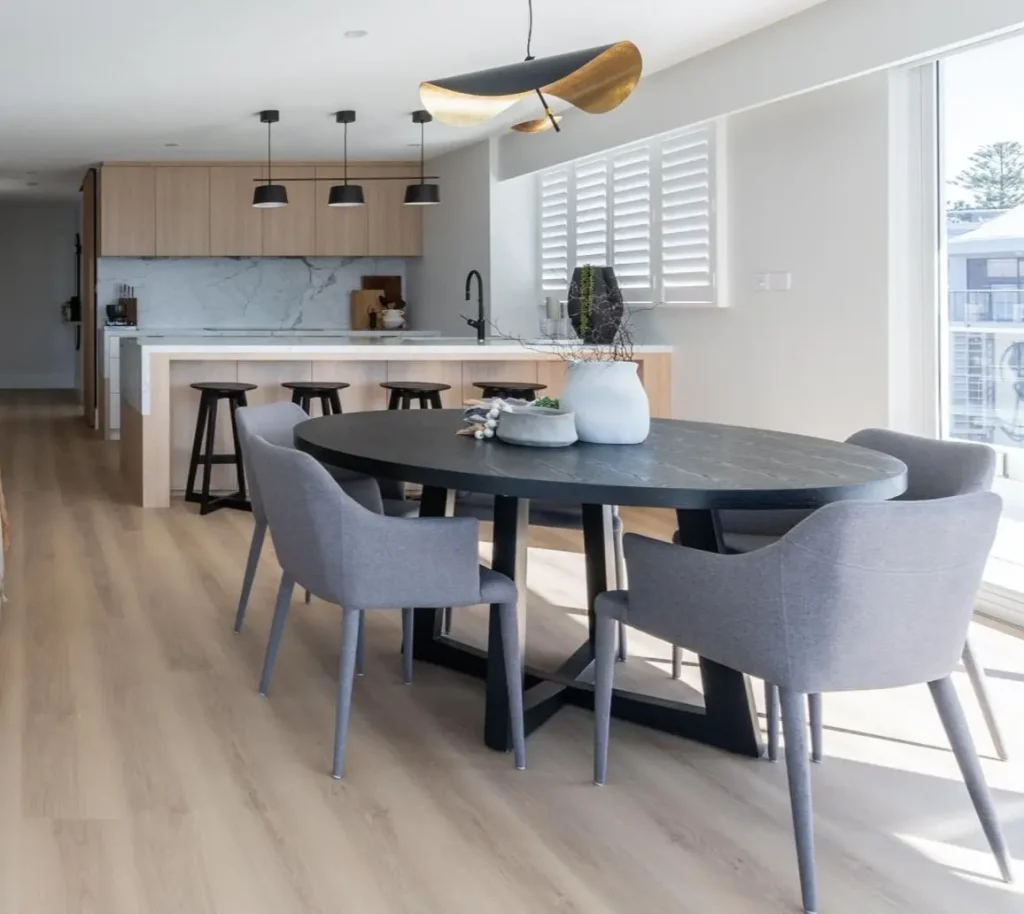
Start with how the space is used
Open-plan living has changed the role of dining chairs and kitchen stools. The kitchen island is no longer just a place to perch while someone cooks. It’s where children eat breakfast, friends gather with a glass of wine, laptops appear, and conversations stretch longer than expected.
The first question is not “what style do I like?” it’s “how long will people sit here?”
If your island is mostly for quick breakfasts, backless stools may work beautifully. They tuck away neatly and keep the kitchen looking open. If the island doubles as a casual dining zone, choose stools with backs, supportive seats and a well-positioned footrest. Comfort matters more than a delicate silhouette when people are staying for dinner.
For dining areas, be honest about everyday use. A huge table bought for Christmas lunch can make the room feel awkward for the other 364 days of the year. An extendable table, a built-in banquette or a smaller round table may suit the lifestyle better.
This is where our interior design services often begin: with the way you live, not just the way you want the room to look.
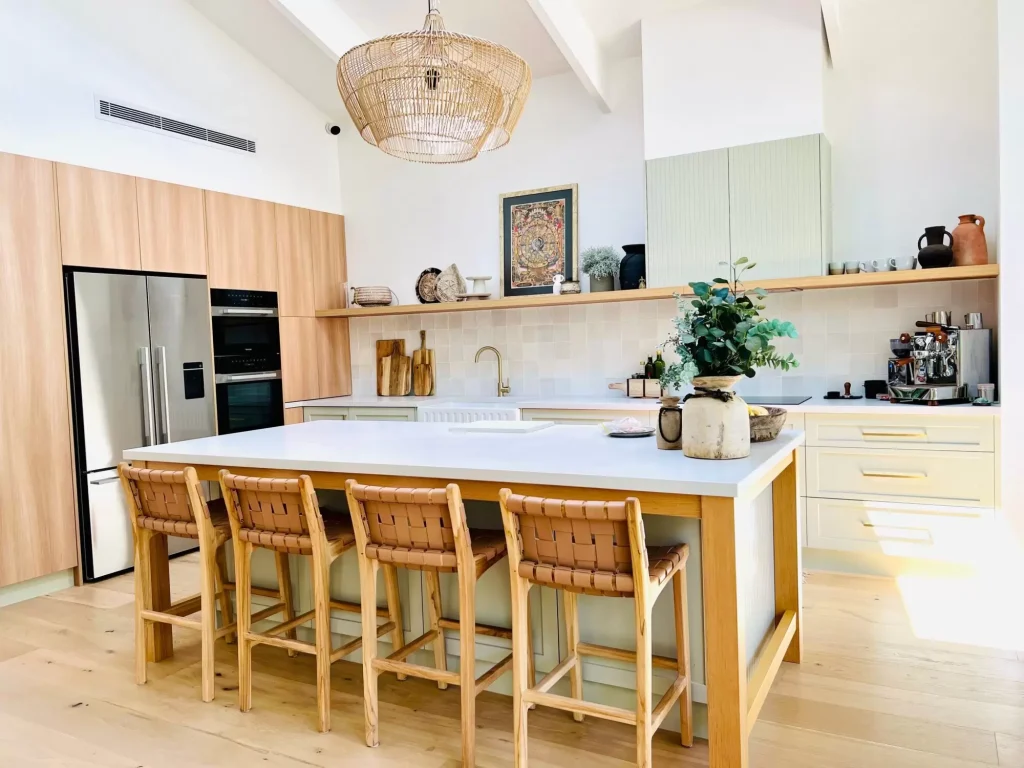
Get the proportions right before you fall in love
Most seating mistakes happen because people buy with their eyes before checking the measurements.
For dining tables, standard height is usually 710-760mm. Most dining chair seats sit around 450-480mm high. The important measurement is the gap between the chair seat and the underside of the table or table rail. Aim for roughly 240-300mm, with about 260mm feeling comfortable for most people.
Allow around 700mm width per person at a dining table, and ideally 800-1000mm behind each chair so people can pull their seat out without squeezing past a wall or sideboard. If your chairs have arms, check they slide under the table. Beautiful armchairs that sit permanently jammed against the table are not beautiful for long.
For kitchen stools, the same principle applies. Measure from the floor to the underside of the benchtop, then allow roughly 230-280mm between the seat and the counter. Most kitchen benches are around 900mm high, which generally suits counter stools with a seat height around 650mm. Bar-height stools are taller and usually wrong for a standard kitchen island.
One practical tip: if your island has thick stone, a shadowline, or a waterfall edge, check the usable leg clearance, not just the overall bench height.
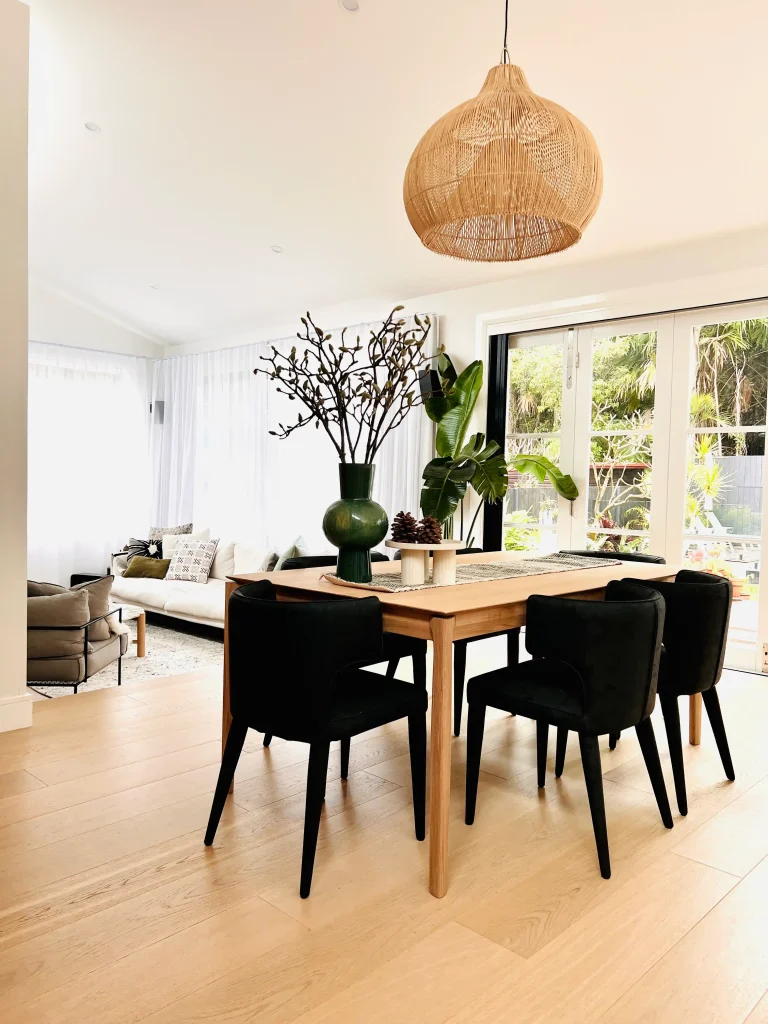
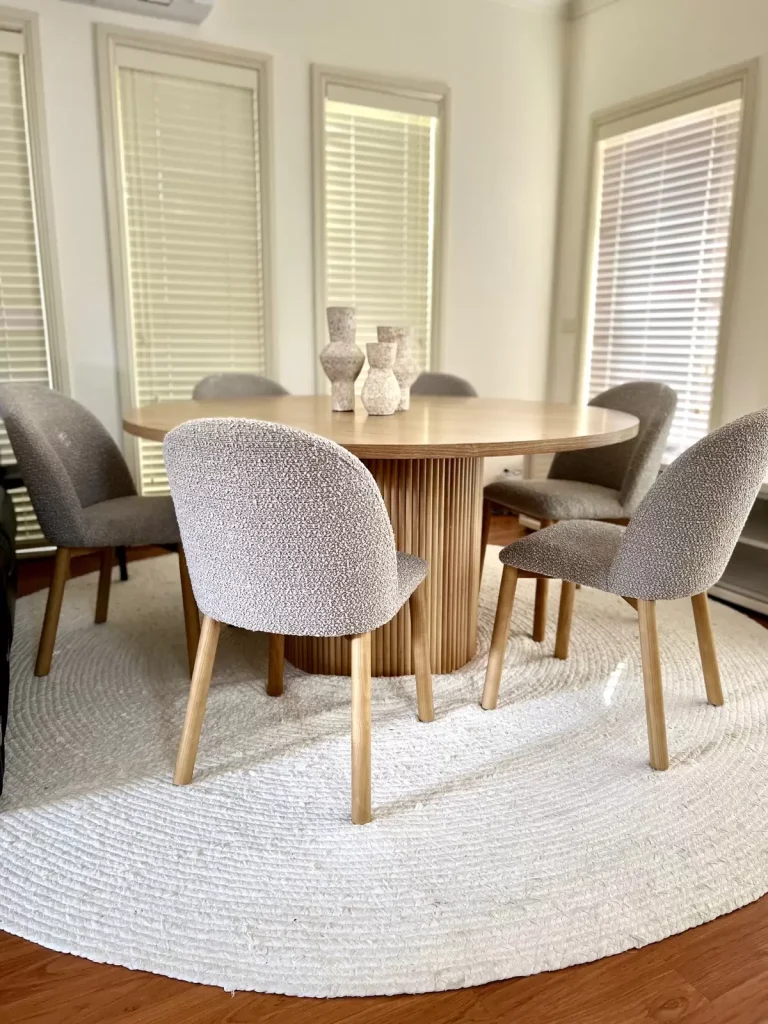
Choose materials that suit the lifestyle
This is where luxury and practicality need to have a proper conversation.
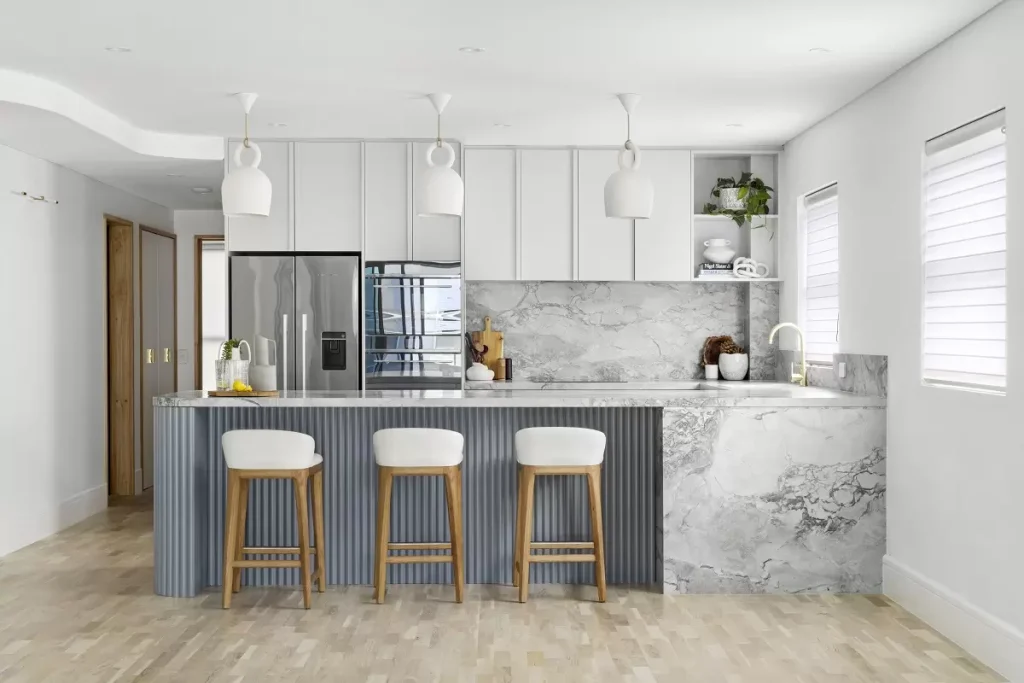
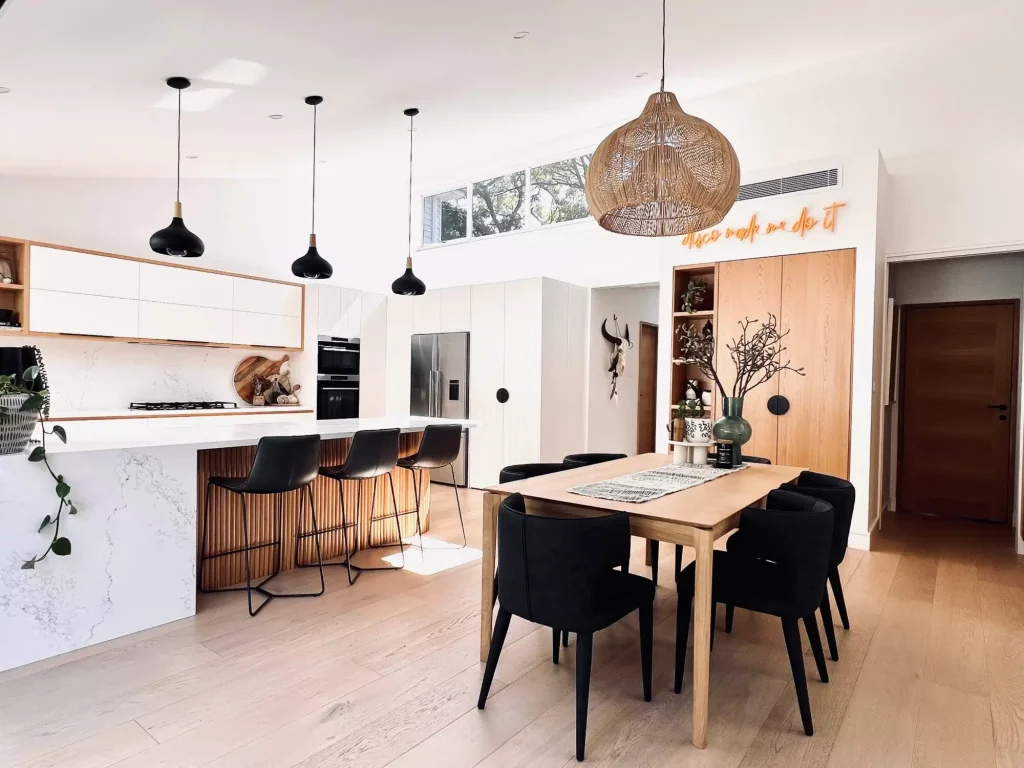
Timber chairs bring warmth and work beautifully in Sydney coastal homes, especially when paired with natural stone, soft whites, warm greys and brushed metal finishes. Oak and ash feel lighter and suit contemporary coastal interiors. Walnut adds depth and works well in more architectural or moody schemes. Black timber can be a strong contrast against an oak table or pale stone island.
What you want to avoid is the “almost match”. Two timbers that are similar but not quite the same can look accidental. Either match the timber closely or create a clear contrast.
Upholstered dining chairs add softness and comfort, but fabric choice matters. If you have young children, pets or long lunches with red wine involved, choose performance fabrics, leather, vinyl leather alternatives or removable seat pads. Bouclé and velvet can be beautiful, but they are not always the kindest choice for a hard-working family dining area.
Rattan and woven details can bring texture and relaxed coastal charm, especially in homes around Avalon, Manly or Pittwater, but consider maintenance. Natural fibres may not love heavy use, direct sun or sticky fingers. In a luxury family home, the best material is often the one that still looks good after years of daily life.
For inspiration on how materials work across a whole scheme, explore our portfolio.
Decide whether the seating leads or supports
Not every chair needs to be the feature.
If you already have a striking stone island, sculptural pendant lights or a beautiful timber dining table, the seating may need to play a quieter role. Simple lines, tonal finishes and subtle texture can make the room feel calm rather than crowded.
If the surrounding scheme is restrained, chairs or stools can carry more personality. A deep olive leather stool, a black timber dining chair, or a pair of upholstered end chairs can anchor the room without making it feel overdone.
The mistake is having too many focal points competing for attention. In an open-plan room, your eye needs somewhere to rest. Seating should connect to the larger palette through timber, metal finish, upholstery tone or shape.
As a full-service interior design studio on Sydney’s Northern Beaches, we look at furniture selection as part of the whole home. The chair is never just a chair. It affects circulation, comfort, sightlines, acoustics and how the kitchen or dining space feels when people gather.
Final thoughts
For aChoosing chairs and stools well comes down to four things: use, proportion, material and role within the room. Get those right and the seating will feel natural, not forced.
The best pieces are comfortable enough to linger in, practical enough for daily life, and considered enough to sit quietly within the wider home.
Planning a renovation or furnishing your kitchen and dining areas? Book a consultation and we’ll help you choose pieces that work beautifully now and still make sense in ten years.
FAQ
Q: What height should kitchen stools be?
A: For a standard 900-920mm kitchen bench, a stool seat height of around 650mm usually works well.
Q: How much space do you need per dining chair?
A: Allow roughly 700mm width per person for comfortable dining.
Q: Should dining chairs match the table?
A: They can, but they don’t have to. Either match timber closely or create a clear contrast.
Q: Are upholstered dining chairs practical for families?
A: Yes, if you choose performance fabrics, leather or easy-clean finishes.
Q: Do kitchen stools need backs?
A: If people sit there for longer meals or work, backs are usually worth it.