


Flooring 101 for Northern Beaches Homes: Concrete, Tiles, Timber, Hybrid & Laminate – What’s Right for You?
If you’re torn between concrete, tiles, or timber-style floors, you’re not alone. Floor selection is one of the biggest mood-setters in a renovation – and one of the easiest places to feel overwhelmed. Below is a clear, design-first guide we use with our Sydney clients to choose flooring that feels sophisticated, calm and quietly confident (without endless second-guessing).
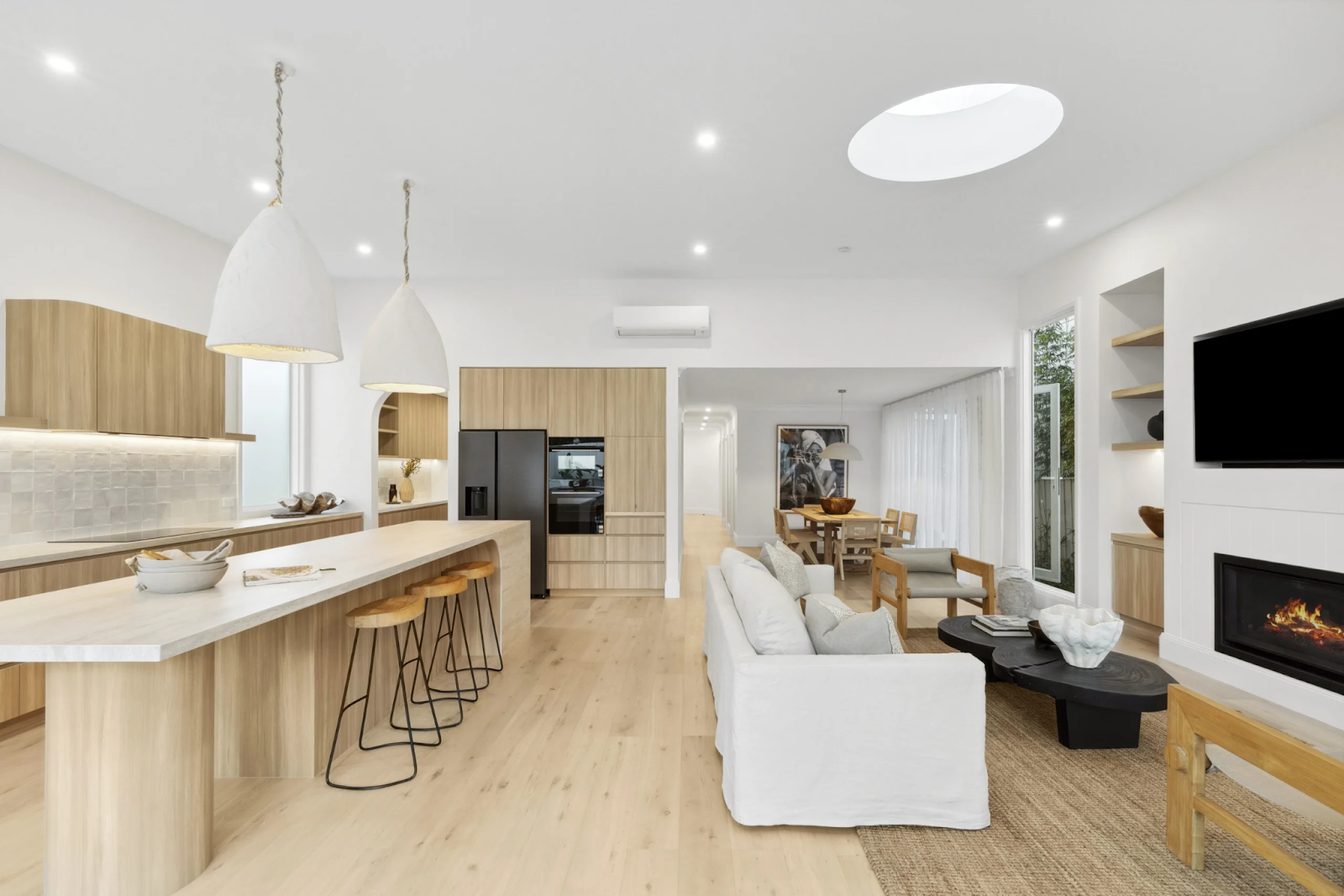
Ground / Polished Concrete (aka: the calm, architectural option)
What it is:
A standard concrete slab is mechanically ground back with diamond grinders after it cures. You can choose how much the surface is cut back – from almost no visible aggregate to a light salt-and-pepper reveal. It’s then sealed (and sometimes densified) for a smooth, refined finish.
How it reads in a space:
- Sleek, continuous, architectural
- Can be matte, satin or high gloss
- Calm and stone-like; great as a “quiet background”
Design levers:
- Colour is controlled by the concrete mix and the sealer
- Aggregate exposure is minimal unless specified
- Works beautifully in modern, minimal, gallery-style interiors
Practical notes:
- Exceptionally hard-wearing and low-maintenance
- Matte finishes are more forgiving than mirror gloss
- Excellent thermal mass for passive heating/cooling
Choose this when: you want the floor to sit quietly under custom joinery, art and statement furniture rather than compete with them.
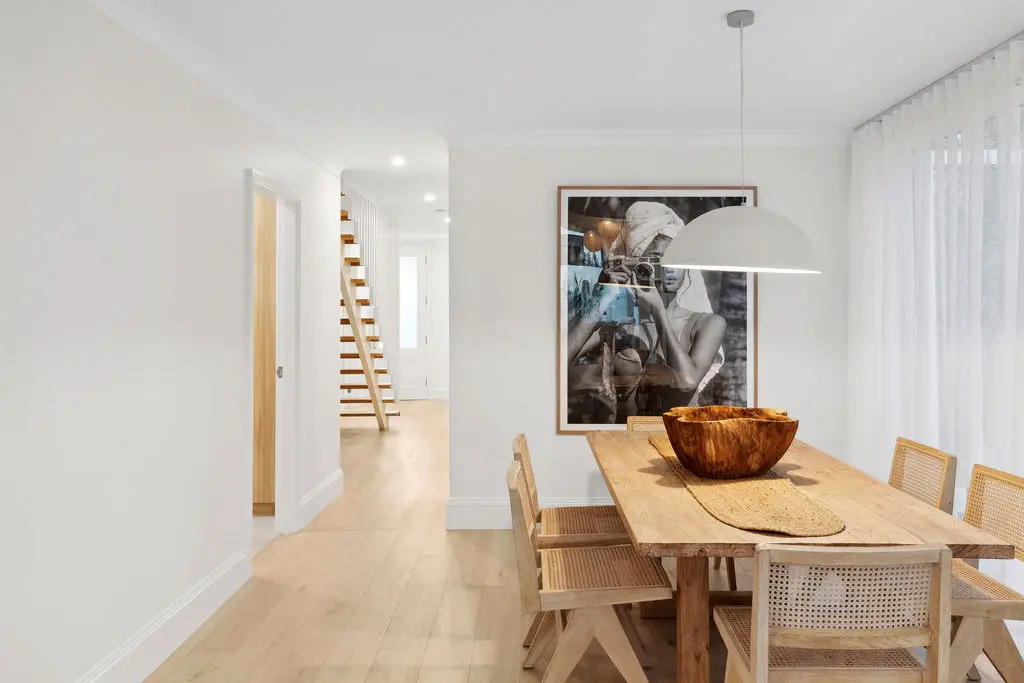
Poured Concrete with Visible Aggregate (aka: the expressive option)
What it is:
Stones, pebbles or custom aggregates are added to the concrete before pour. The surface is then exposed – either by washing while “green” or by grinding later – so the aggregate becomes the feature.
How it reads in a space:
- More textured and tactile
- Visually busier (closer to terrazzo or palladiana)
- Warmer and more character-forward
Design levers:
- Aggregate colour/size is a major decision (think toffee, chocolate, cream, charcoal for neutral foundations)
- Brings movement and personality underfoot
Practical notes:
- Naturally better slip resistance due to texture
- Durable, but less forgiving in very minimal spaces if the mix isn’t loved
- Difficult to “edit” later if you tire of the stone
Choose this when: the floor itself should be a feature – entries, stairs, thresholds and indoor–outdoor transitions on the Northern Beaches love this.
Polished vs Aggregate Concrete – the real difference, distilled
- Polished/ground concrete: about surface refinement
- Visible aggregate: about material expression
One is calm and architectural. The other is decorative and textural. Neither is “better” – they just do different jobs.
When Tiled Flooring Makes More Sense Than Concrete
Concrete is brilliant – but it isn’t the only path to a serene, contemporary home.
Great scenarios for tiles:
- Wet areas & pool adjacencies: Porcelain or stone tiles with a P4/P5 slip rating can be safer for sandy feet and post-beach rinse-offs.
- Acoustic comfort in apartments: Concrete may need acoustic treatments; porcelain with specific, high-density acoustic underlayment can help meet strata ratings.
- Budget control in renovations (no new slab): If you’re not replacing the slab, tiled finishes can deliver a similar visual language without structural work.
Design notes for tiles:
- Large format porcelain (e.g., 600×1200 or larger) gives you that “continuous plane” feeling similar to concrete, with minimal grout – especially if using rectified tiles.
- Stone-look porcelains have come a long way; they bring warmth and nuance while staying low-maintenance.
- Grout choice matters: colour-matched grout keeps the eye on the surface, not the joints.
- Underfloor heating: pairs beautifully with tile for that winter-morning comfort.
Watch-outs:
- Busy veining across lots of cuts can feel restless in open plans – map set-outs with your sightlines so main runs look intentional.
- Exterior continuation needs a matching slip-rated outdoor tile from the same series for true inside–outside flow.
Timber vs Hybrid vs Laminate – what’s the difference and who are they for?
This is where lifestyle, moisture and maintenance come into play. Quick definitions first:
- Timber (engineered or solid): Real timber veneer (engineered) or solid planks. Warm, authentic, can be refinished (engineered to a point).
- Hybrid: A rigid core (SPC/WPC) with a vinyl wear layer and printed timber image. Highly water-resistant, dimensionally stable.
- Laminate: HDF core with a printed image and durable wear layer. Cost-effective, not for wet areas unless specifically rated.
How they feel underfoot (and to live with):
- Timber:
- Feel: Naturally warm, soft acoustics, visually timeless.
- Design fit: Contemporary coastal, modern classic, spaces craving organic warmth against stone and glass.
- Care: Needs sensible maintenance; engineered boards can be refinished once or twice depending on veneer thickness.
- Where we love it: Living zones, bedrooms, stairs (with detail-led nosings).
- Feel: Naturally warm, soft acoustics, visually timeless.
- Hybrid:
- Feel: Slightly firmer; good underfoot stability and excellent water resistance.
- Design fit: Family homes where spills, pets and sandy feet are daily life. Great for Northern Beaches weather and doors flung open to decks.
- Care: Easy. Many lines are wet-mop friendly.
- Where we love it: Whole-home solutions including kitchens and laundries where you still want a single continuous timber look.
- Feel: Slightly firmer; good underfoot stability and excellent water resistance.
- Laminate:
- Feel: Very durable surface; can feel rather manmade and sound a touch “clicky” without good underlay.
- Design fit: Budget-aware spaces that still want a crisp, consistent timber look.
- Care: Easy, but avoid standing water unless rated.
- Where we love it: Secondary living, kids’ zones, investment properties.
- Feel: Very durable surface; can feel rather manmade and sound a touch “clicky” without good underlay.
Northern Beaches specifics:
Salt air, bi-folds, and sandy kids are real. If you’re worried about water, hybrid is the low-stress, good-looking workhorse. If you crave authenticity and the patina of time, engineered timber wins – we’ll specify an appropriate finish and humidity-sensible board construction. Laminate is the practical all-rounder when budget needs a firmer hug.
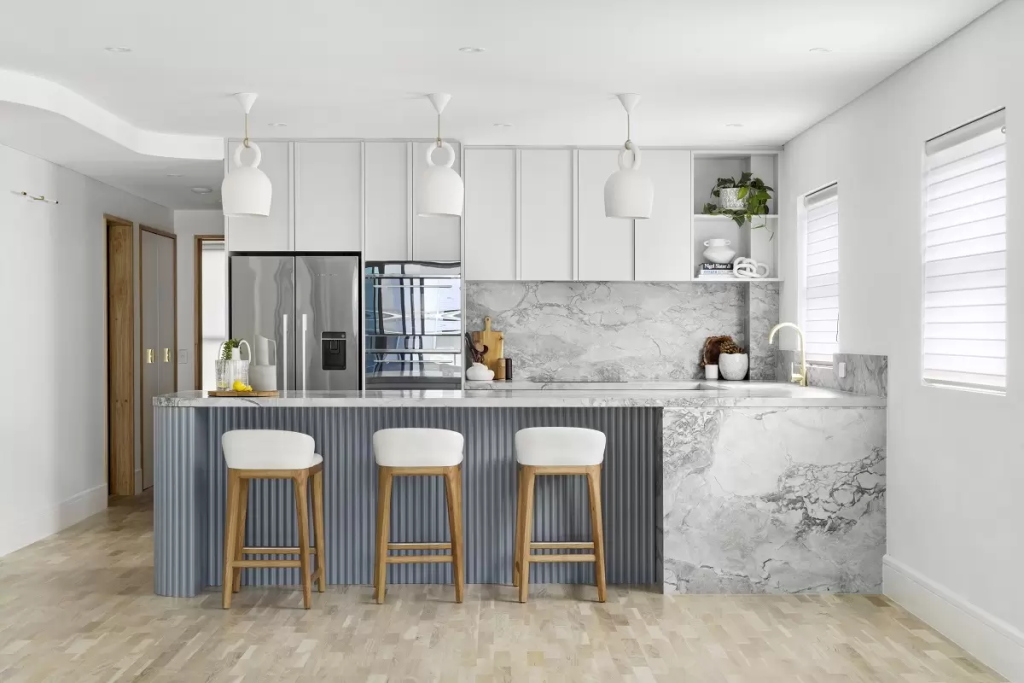
Case study – timber flooring
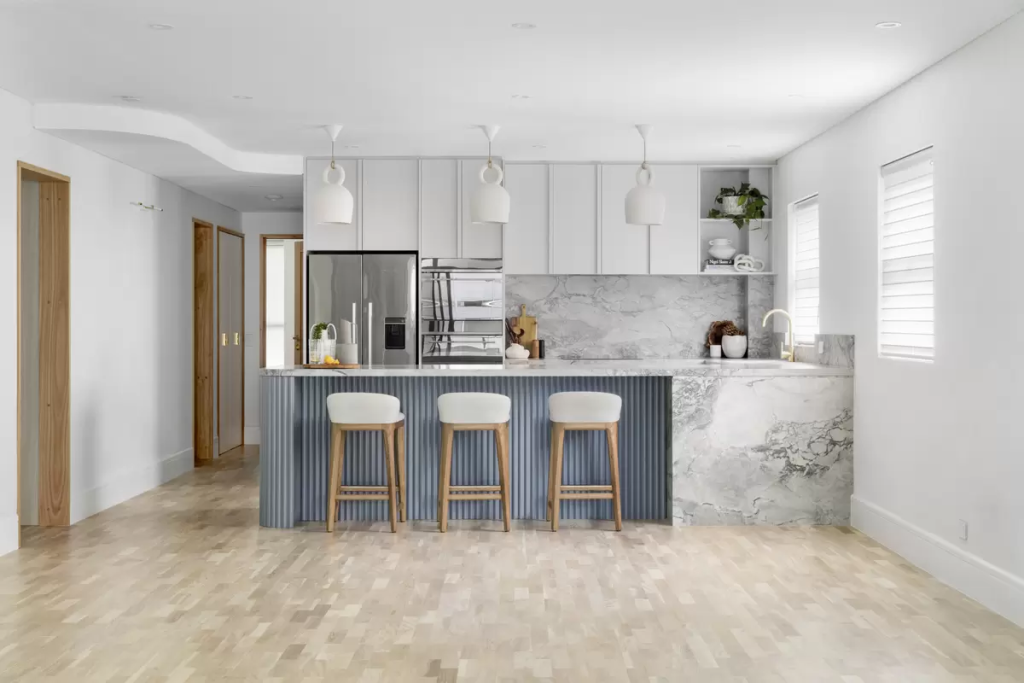
Another reason we love timber flooring is its ability to evolve with your home. Unlike many finishes, timber doesn’t lock you into one look forever — it can be refreshed, lightened, or softened as your style (or the light in your home) changes. In our Dee Why project, we took a dark, shiny solid timber parquetry floor and sanded and bleached it back to a light oak tone. The result was immediate: brighter ambient light, a calmer feel underfoot, and a home that suddenly felt more open and contemporary without changing the layout. It’s a powerful reminder that sometimes the most transformative design move isn’t replacing — it’s reworking what’s already there.
Before
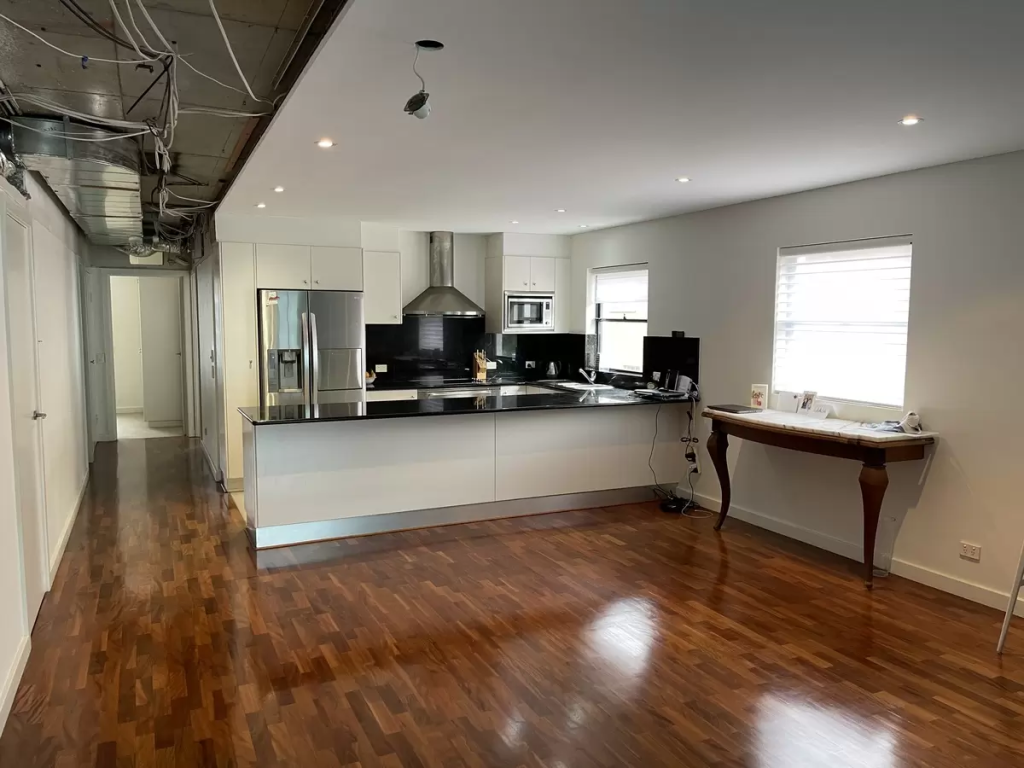
AFTER
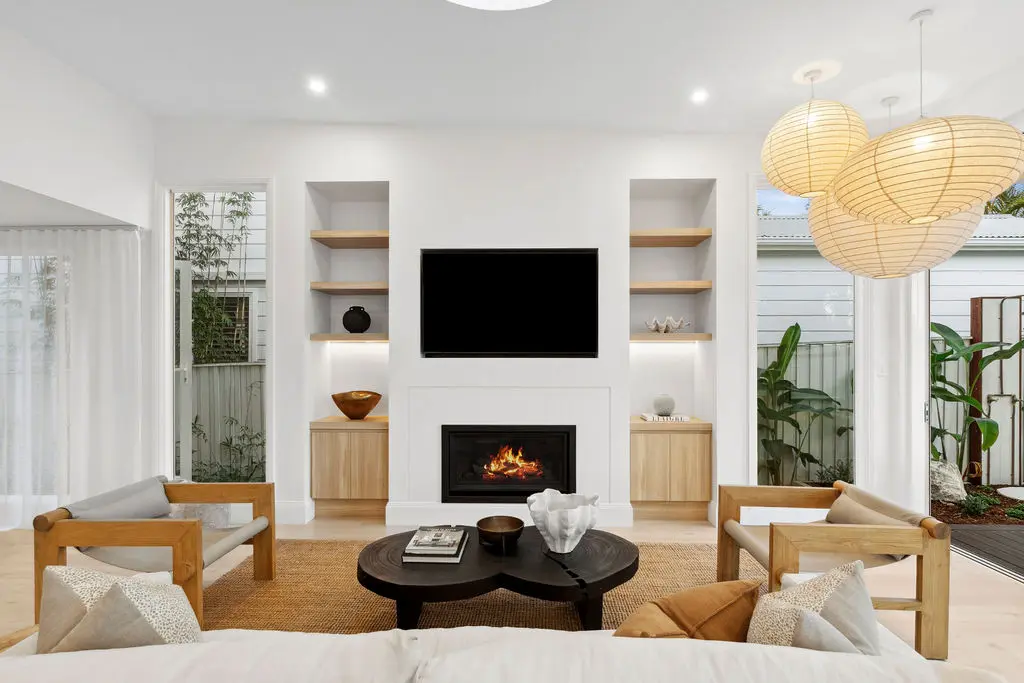
Engineered timber is often the sweet spot for coastal homes — it delivers warmth and texture without fighting the architecture or the environment. In our Collaroy project, we used engineered timber to anchor the palette of sandy neutrals and create that relaxed, coastal entertainer’s feel the clients were craving. The layered construction gave us stability and consistency across large, open-plan areas, while the softer oak tones brought warmth underfoot and balanced the light-filled spaces beautifully. It’s the kind of flooring choice that quietly supports the brief — coastal, calm, and inviting — without ever trying too hard.
Case study – hybrid flooring
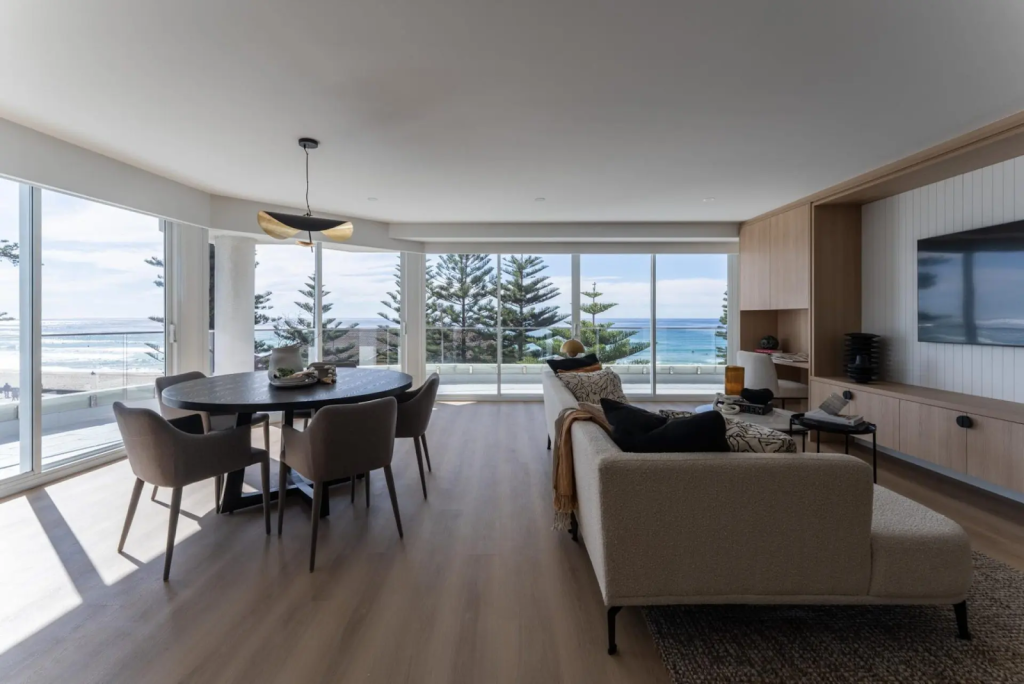
Hybrid flooring can be an incredibly smart choice when performance needs to work just as hard as aesthetics. In our Manly seafront apartment renovation, the clients had previously dealt with damp and mould issues from the coastal air, and they also needed something scratch-resistant enough to live comfortably with their dog. Hybrid flooring gave us the durability and moisture resistance the space demanded, without compromising on appearance. We selected a refined, timber-look finish that still felt high-end and cohesive with the apartment’s architecture — an important consideration given the long-term plan to sell at a premium price. It’s a great example of how the right practical choice can still support a polished, market-ready result.
Case study – tiled flooring
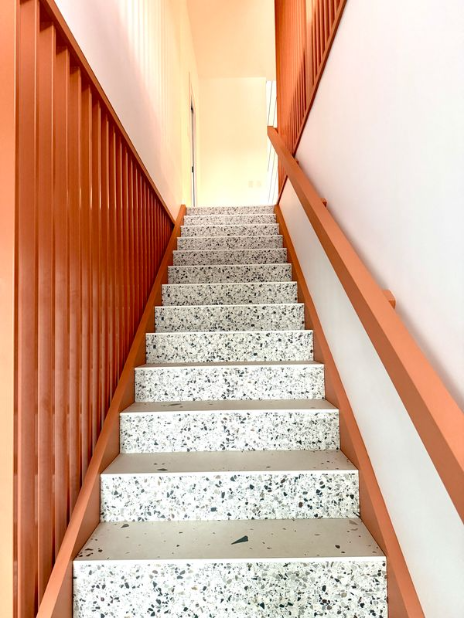
Tiled flooring can be a brilliant way to balance budget, durability, and design personality — especially for busy family homes. In our Manly Vale project, the client loved the look of concrete, but the budget didn’t quite stretch that far. Instead, we selected a contemporary large-format 600×1200 concrete-look tile with subtle aggregate detailing, which delivered the same grounded, architectural feel in a far more practical way. To add personality (and a bit of fun), we paired it with a heavier terrazzo tile from the same range on the stair risers, turning the staircase into a design feature rather than an afterthought. For a family with three kids who value colour, character, and long-term durability, it was the perfect mix of hard-wearing and expressive — proof that practical choices can still feel bold and intentional.
Current project – concrete flooring
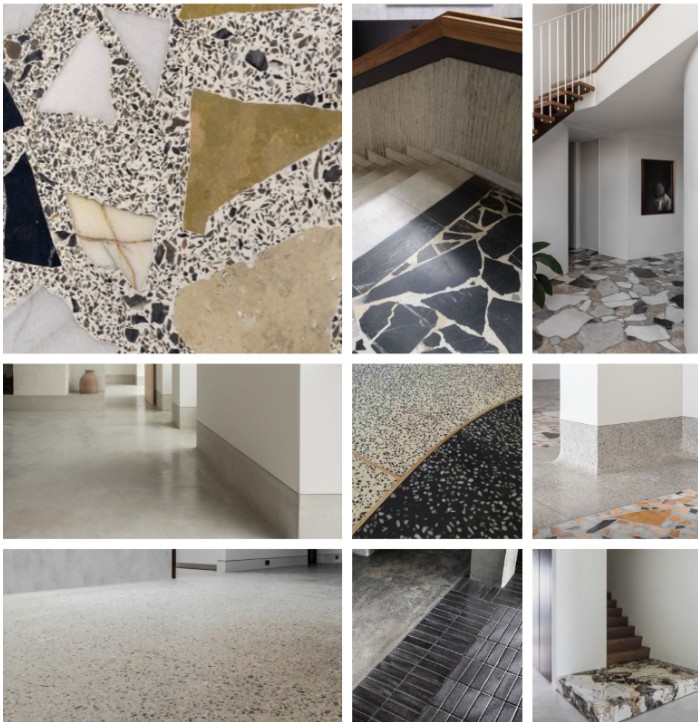
Concrete is where our current Cremorne project really gets to show its personality. We’re having fun layering different expressions of the same material — a heavier aggregate concrete through the entry to introduce colour, texture, and a sense of arrival, then something more pared-back through the living, kitchen, and dining zones so the art and custom joinery can do the talking. We’re also exploring Palladiana-inspired ideas and considered transitions between flooring types, using contrast and rhythm rather than hard stops. It’s shaping up to be one of those homes where the floors quietly guide you through the space — and we genuinely can’t wait to see it come to life.
Fast Cheat-Sheet
| Goal / Constraint | Best Bets | Why |
| Minimal, gallery-calm interiors | Polished/ground concrete or large-format porcelain | Seamless, quiet planes that recede under art and joinery |
| Feature underfoot, texture & movement | Visible aggregate concrete | Stone mix becomes the hero; brilliant in entries & transitions |
| Family proof, low stress with water/sand | Hybrid | Water-resistant, stable, easy care; still reads “timber” |
| Authentic warmth & longevity | Engineered timber | Real timber, refinishing ability, timeless character |
| Budget control with durability | Laminate or porcelain tile | High wear tolerance and strong look-for-less |
| Best for wet areas | Porcelain/stone tile | Slip ratings, easy cleaning, exterior continuity options |
| Thermal mass (passive comfort) | Concrete | Stores heat/cool to smooth temperature swings |
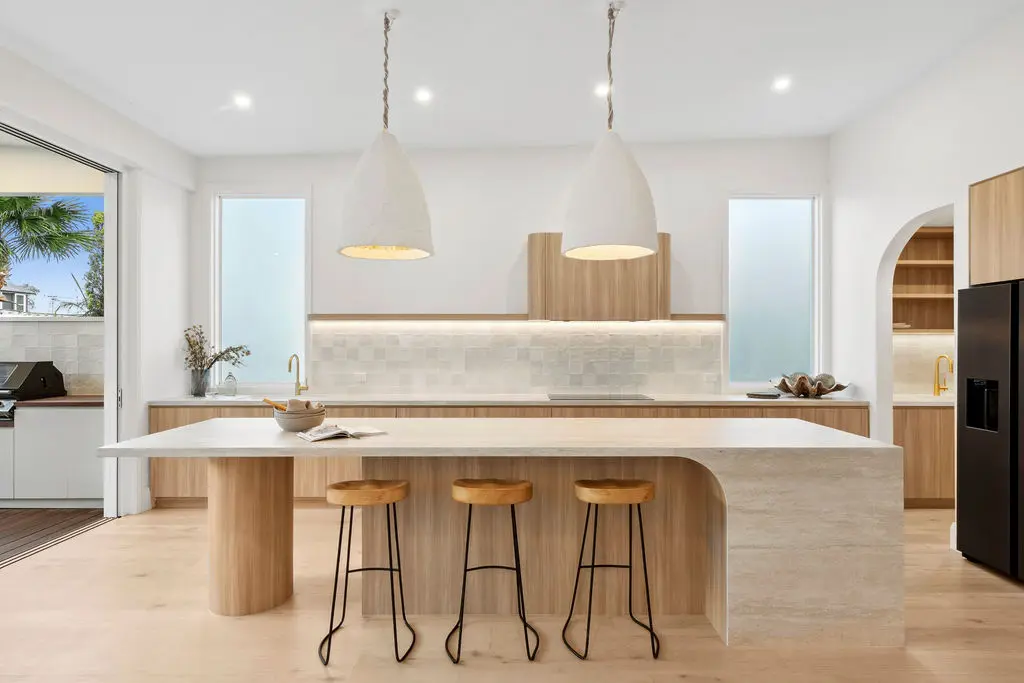
A design rule that saves headaches: pair flooring to your kitchen stone
Your kitchen benchtop has a huge influence on how your floor colour reads – and getting this pairing wrong is one of the quickest ways to create regret. Stone carries strong undertones (warm, cool, creamy, greyed), and your flooring will either soften those tones beautifully or fight against them every single day. We often guide clients to choose flooring in response to their kitchen stone, not the other way around. It reduces visual tension, makes the whole space feel calmer, and saves a lot of second-guessing once everything’s installed. It’s a simple rule – but one that makes the difference between a home that feels considered and one that feels slightly “off.”
Flooring Transitions
Flooring transitions are one of those details that can either quietly solve problems — or unintentionally draw attention for the wrong reasons. On a practical level, they need to manage changes in material thickness, movement, and wear without creating trip hazards or awkward breaks. But from a design perspective, this is where things get interesting. When handled thoughtfully, transitions can become a feature in their own right — a change in direction, a subtle border, a Palladiana-style junction, or a clean shadow line that helps define zones without walls. Done well, they guide you through the home, add rhythm and intention, and make the overall design feel resolved rather than pieced together.
How we guide clients to the right choice (without 40 showroom trips)
- Start with feeling, not product. Do you want the floor to be a quiet backdrop or a feature?
- Map the light & life-patterns. Northern sun, indoor–outdoor flow, pets, kids and sandy feet all matter.
- Test. We review boards/tiles and sample trays in your actual light.
- Plan the details. Set-outs, thresholds, stair nosings, and exterior continuity are where projects look truly resolved.
If you’re planning a luxury family home renovation on the Northern Beaches and want help choosing between concrete, tiled flooring, timber, hybrid or laminate, we’ll make it clear, calm and beautifully resolved – so your flooring supports your life, not the other way around.
Thinking about a renovation in Manly, Freshwater, Avalon or Mosman? Let’s talk about how you live, then choose the finish that will serve you for years. Book a consultation and we’ll bring samples, options and a clear recommendation – no overwhelm, just good decisions.
