


How to design the perfect home office
Working from home sounds wonderfully simple until your “office” becomes the dining table, your printer lives in the hallway, and every video call reveals a pile of laundry behind you.
A perfect home office isn’t just about finding a nice desk. It’s about creating a room, nook or built-in zone that supports focus, comfort and your lifestyle without adding visual clutter to the rest of the house. For many of our Northern Beaches clients, the best home office feels calm, quietly luxurious and properly integrated into the way the family actually lives.
Here’s what to think about before you buy the chair, order the lamp, or claim the guest room forever.
Start with location, not furniture
The biggest mistake people make is choosing a desk before deciding where work should happen.
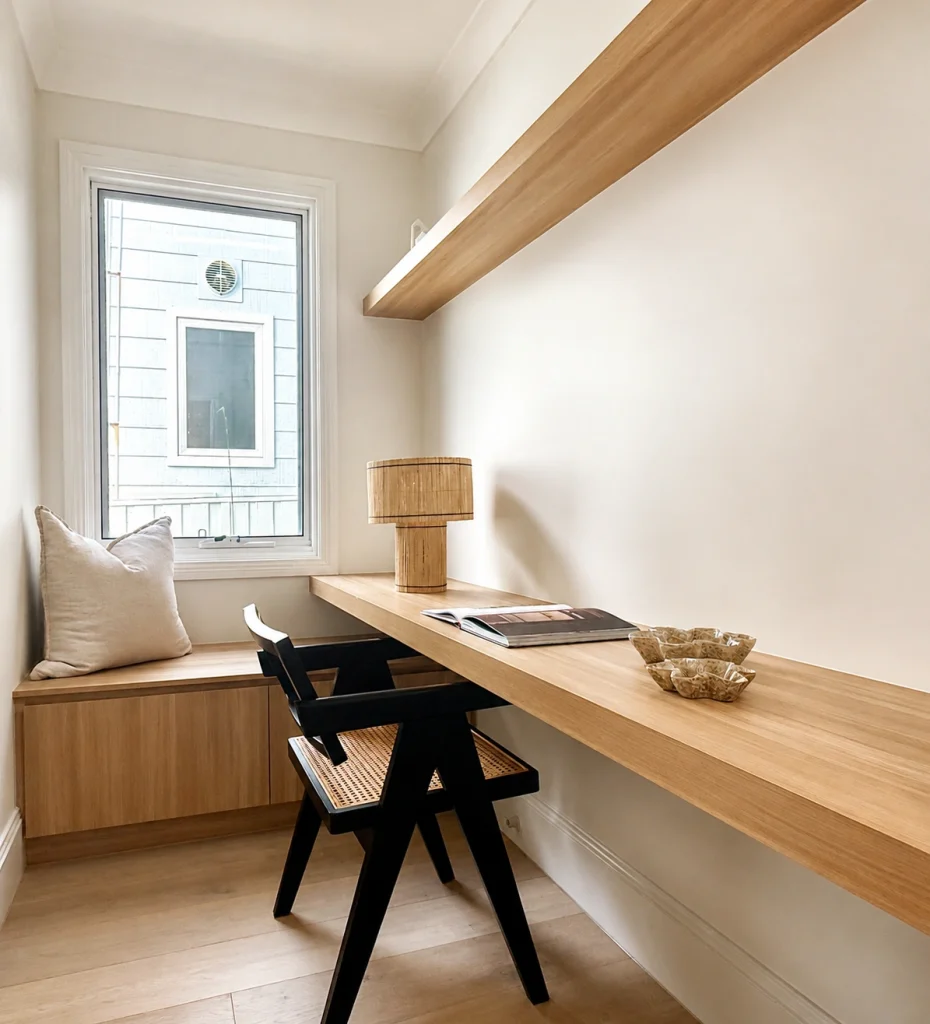
A good home office needs separation. Ideally, that means a room with a door, especially if you take calls or share the house with children. If you don’t have a dedicated study, look for underused areas: a wide hallway, guest bedroom wall, landing, or the quiet end of a living room.
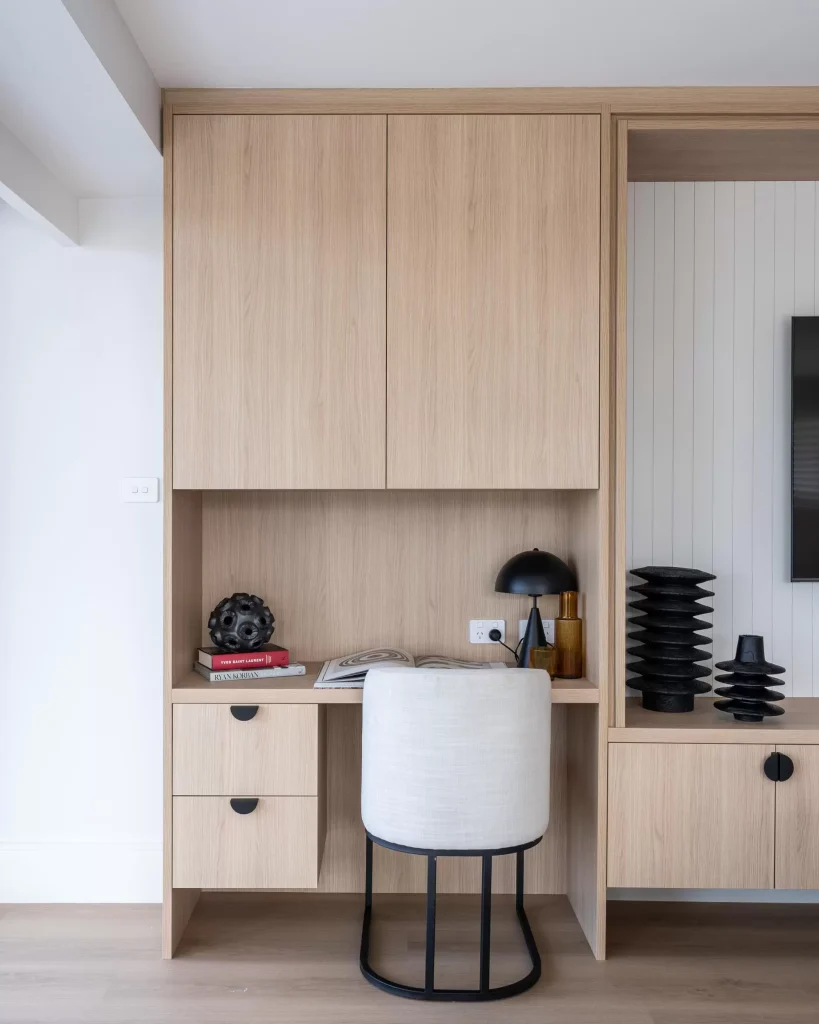
The trade-off is privacy versus convenience. A tucked-away office gives you focus, but it may feel disconnected. A joinery nook near the kitchen is convenient, but it needs clever concealment so work doesn’t bleed into family time.
Practical checks before you commit:
Allow at least 600mm desk depth for comfortable laptop or monitor use, and 1200 – 1500mm width if you need writing space, drawers or dual screens. Check power points, data access, natural light, glare, and whether the chair has enough clearance behind it. If you’re renovating, this is the time to plan floor boxes, hidden charging drawers and integrated cable access, not after the walls are painted.
For full renovation planning, our interior design services help map these decisions early so your home office works with the wider floor plan, not as an afterthought.
Choose materials that feel good every day
A luxury home office should feel good to use, not just good in photos.
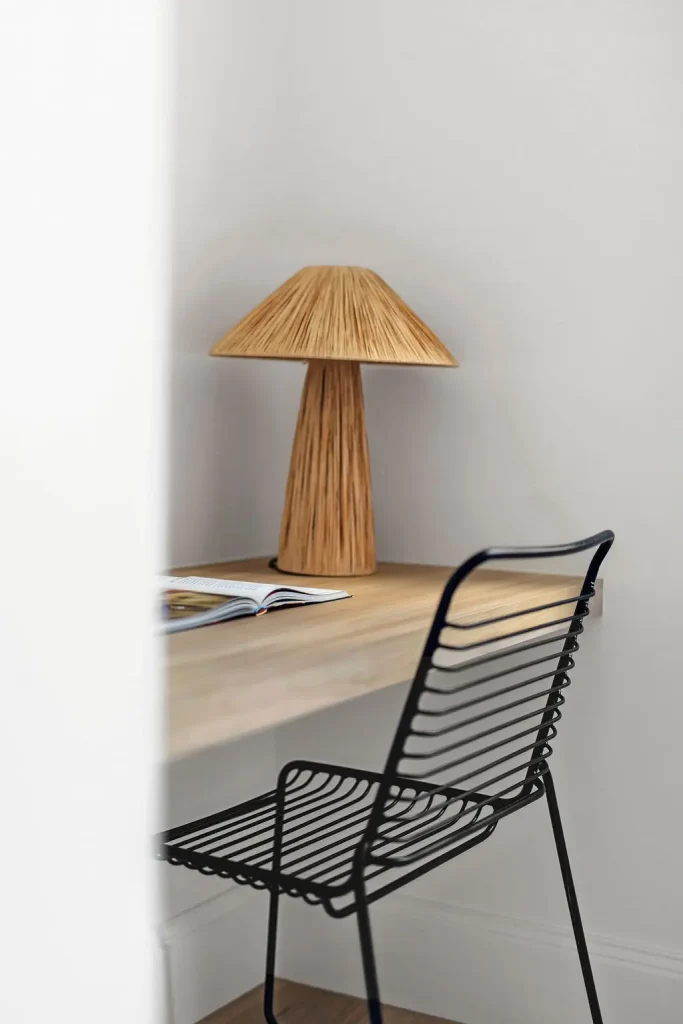
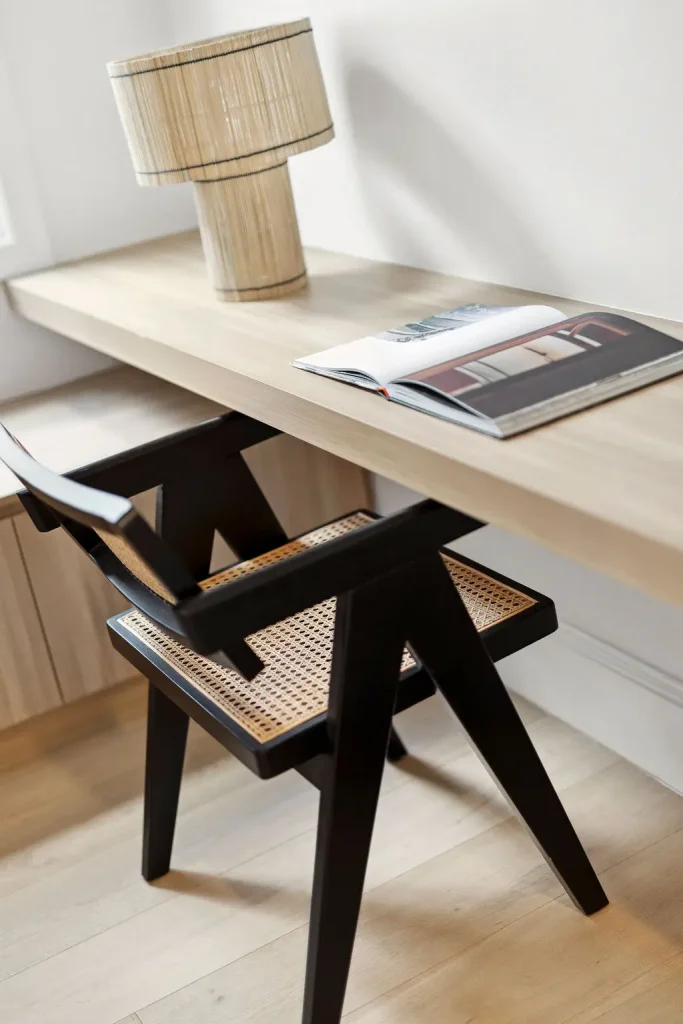
A glass desk might look sleek, but it can feel cold under your arms and show every fingerprint. A polished stone top may be beautiful, but it can be noisy for typing and harder on wrists. Warm timber, timber veneer, leather inlay, soft-touch laminate or a honed stone surface can feel more comfortable for daily use.
For custom joinery, we often consider:
Veneered oak or walnut for warmth, 2-pac painted cabinetry for a clean architectural finish, fluted or V-groove doors for subtle texture, and concealed finger pulls to keep the look calm.
If the office is visible from a living space, closed storage is usually worth the investment. Open shelving can look beautiful, but only if you genuinely have time to keep it edited.
This is where budget can creep. Custom joinery, stone tops, integrated lighting and specialty hardware all add up. The way to control it is to decide what needs to be custom and what can be loose furniture. A built-in desk with simple drawers and beautiful wall shelving may deliver more value than overcomplicating every cupboard.
Get the comfort details right
If you work from home regularly, your chair is not the place to be heroic.
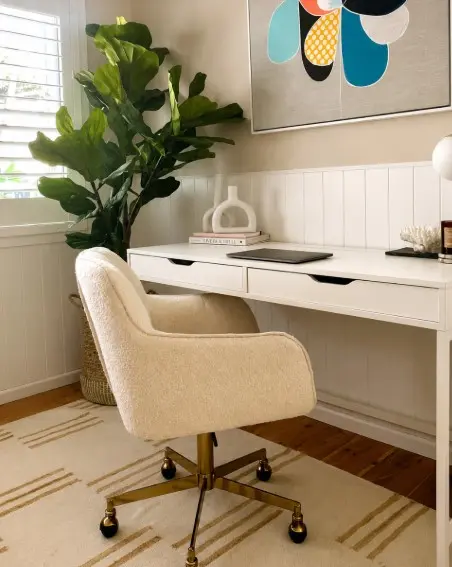
A beautiful chair with poor support will make itself known by lunchtime. Look for height adjustment, lumbar support, swivel function and castors if you need to move between desk, printer and storage. If you choose castors, protect timber flooring with a low-profile rug or chair mat that suits the room.
Lighting matters just as much. Natural light helps a workspace feel alive, but glare across a screen is exhausting. In Sydney’s coastal homes, especially around Avalon, Manly and Pittwater, the light can be bright and reflective. Position the desk side-on to the window where possible, then layer lighting with overhead ambient light and a dedicated desk lamp.
A functional home office needs three lighting decisions: daylight control, task lighting and evening mood. Dimmers, warm bulbs and sheer window treatments make a room more flexible if it also needs to work as a guest room, reading room or secondary living space.
Acoustics are often forgotten. Hard floors, bare walls and minimal furniture can make a room echo, which is unpleasant on calls. Rugs, curtains, upholstered chairs, books, artworks on canvas and even a small sofa help absorb sound and make the space feel more settled.
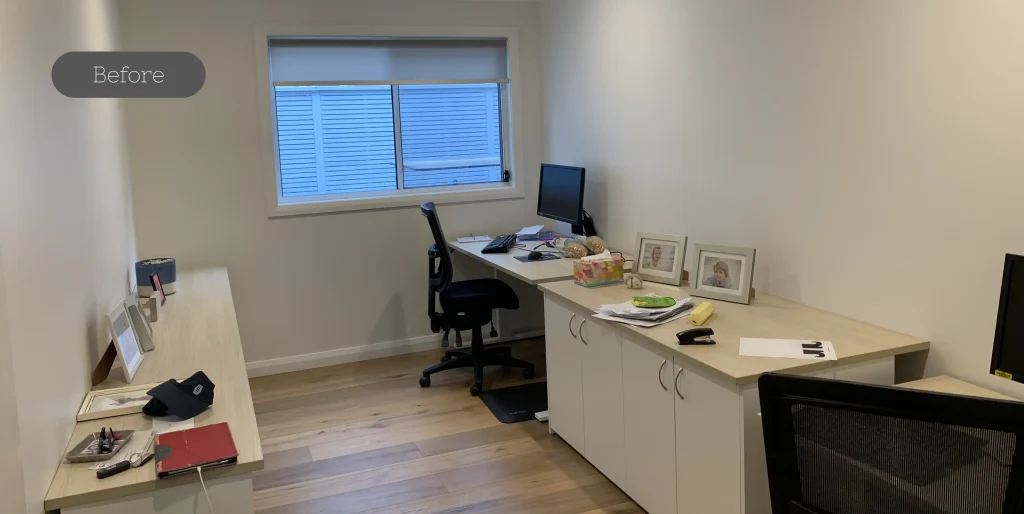
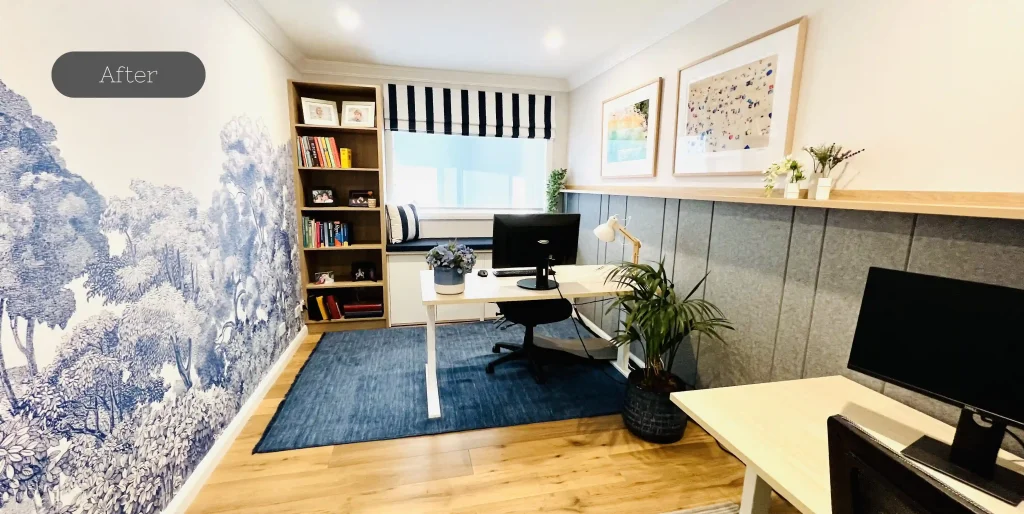
This study pictured below had a noticeable echo, so we introduced custom grooved acoustic panels beneath a shallow timber shelf – softening the sound while adding warmth, texture and architectural detail.
Design the room around habits, not ideals
The perfect home office is honest about how you work.
Do you spread papers everywhere? You need an in-tray, not a fantasy of a bare desk.
Do you charge multiple devices? Dedicate a drawer with internal power.
Do you spend hours on video calls? Plan a backdrop that feels considered, not staged – with artwork and details that quietly reflect who you are.
This is also where styling becomes useful rather than decorative. A plant, artwork, lamp, ceramic tray or framed family photo can make the space feel personal, but too much styling competes with concentration. The aim is not a showroom. It’s a room you can walk into on Monday morning and feel ready.
For related ideas, read our custom joinery blog or explore our renovation design service.
Final thoughts
A perfect home office should support focus, protect your posture, hide the mess, and still feel like part of your home. The best results come from making the important decisions early: location, light, storage, power, acoustics and materials.
As a full-service interior design studio on Sydney’s Northern Beaches, we help clients make those decisions with clarity before they become expensive problems on site.
Planning a renovation or rethinking how your home supports working from home? Book a consultation and let’s design a workspace that feels calm, considered and made for real life.
FAQ
Q: What size should a home office desk be?
A: Allow at least 600mm depth, with 1200–1500mm width if you need writing space, drawers or multiple screens.
Q: Is custom joinery worth it for a home office?
A: Yes, if the office is visible, compact, or needs to hide printers, files, chargers and cables.
Q: Where should a desk go in relation to a window?
A: Side-on to natural light is usually best, as it reduces screen glare while keeping the room bright.
Q: How do you make a home office feel less corporate?
A: Use warmer materials, layered lighting, soft furnishings, art and closed storage to make it feel part of the home.
Q: What causes home office budgets to blow out?
A: Late decisions around power, joinery, lighting and storage. Planning these early keeps costs clearer.