


How to plan the perfect kitchen
The kitchen has long been the heart of the home, but with open plan living now more common than ever, it’s also become an extension of your living space. It needs to work hard, feel calm, and sit naturally within the rest of your home.
A well-designed kitchen is never just about cabinetry, benchtops or appliances. It’s about how you move through the space, where things live, how the light falls, and how the kitchen supports everyday life – from busy school mornings to relaxed weekend entertaining.
As a Northern Beaches kitchen designer, I always take a holistic view of a kitchen renovation. The goal is to create a space that feels connected to the rest of the home, rather than something that looks beautiful in isolation but doesn’t quite belong.
Here are my top tips for anyone planning a kitchen renovation.
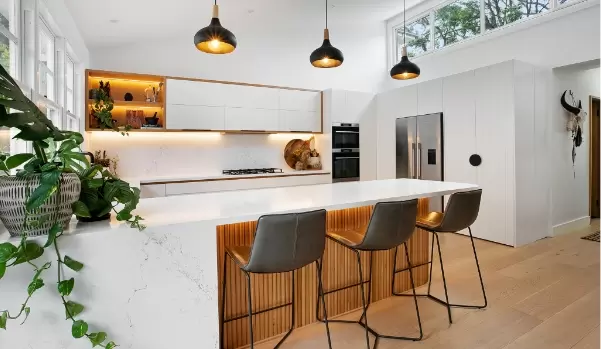
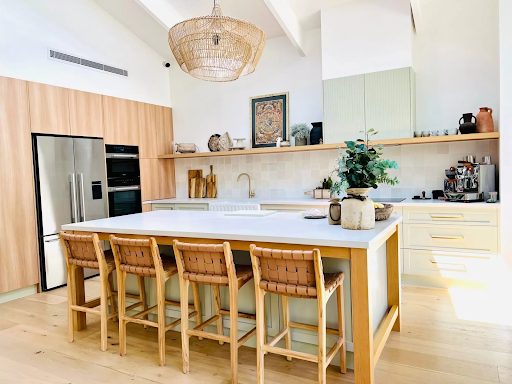
1. Define Your Style:
The first step in any kitchen renovation is to decide how you want the space to feel.
What’s your go-to look? Do you love contemporary coastal interiors, a more traditional Hamptons style, clean minimalism, or something warmer and more layered?
Pinterest is a useful place to start if you’re still finding your style, but the trick is to look for patterns in what you’re saving. Are you drawn to pale timber? Natural stone? Soft neutrals? Darker joinery? Open shelving? Curved details?
Your kitchen style will guide your choices for materials, colour schemes, cabinetry profiles, lighting and hardware. The best kitchens don’t follow trends blindly, they reflect how you and your family actually live.
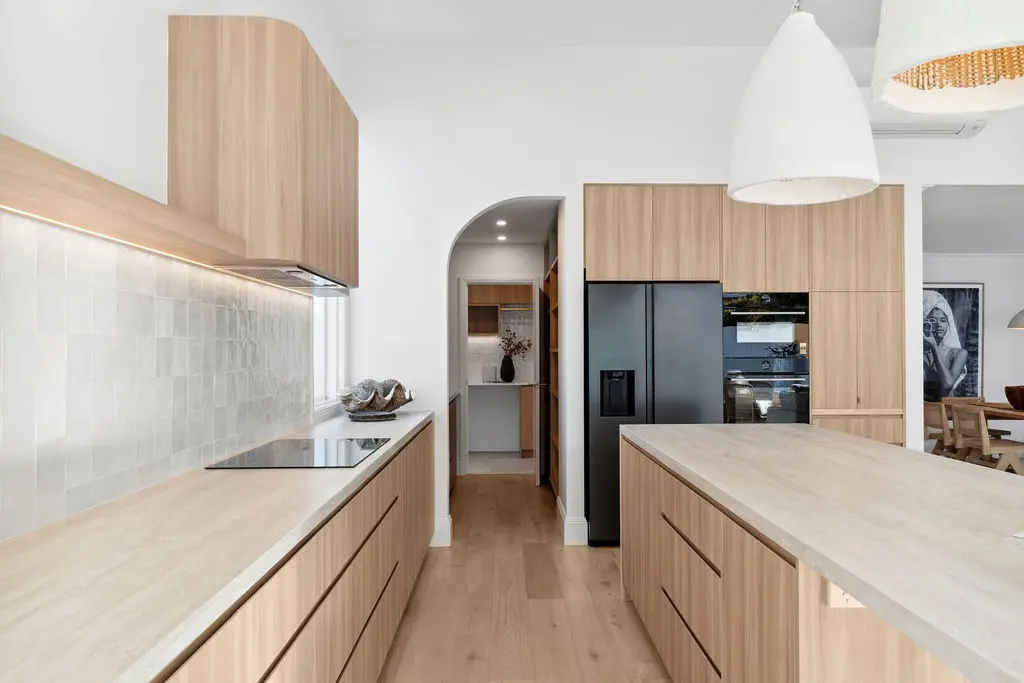
2. Plan Your Layout:
A beautiful kitchen can quickly become frustrating if the layout isn’t right.
When planning your kitchen layout, think carefully about flow and functionality. This includes the classic working triangle: the sink, refrigerator and cooktop. Ideally, the sum of the three sides of the triangle should not exceed around 7-8 metres, and each leg should generally sit between 1.2 metres and 2.7 metres.
That said, modern kitchens often need to do more than this traditional triangle allows. You’ll also want to consider:
- Where you prep food
- Where the bin sits
- How close your dishwasher is to your china, glassware and cutlery
- How much bench space you need near the cooktop
- Whether guests or children will naturally move through the cooking zone
I always like to position a pull-out bin underneath the main preparation surface. It’s one of those practical details you may not notice straight away, but you’ll appreciate every single day.
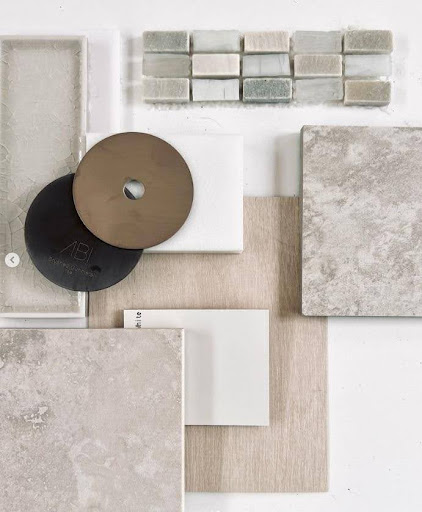
3. Choose Durable Materials:
The kitchen is one of the hardest-working spaces in the home, so materials need to be durable, easy to clean and suited to your lifestyle.
Benchtops, cabinetry and flooring all need to withstand frequent use. Quartz, granite and solid surface benchtops are popular because they’re hardwearing and relatively low-maintenance.
Please don’t underestimate the beauty of natural stone. It does require more care, but it brings a depth, movement and individuality that engineered products can’t always replicate. For many high-end kitchen renovations, natural stone is still the finish that gives the space that quietly confident, luxurious feel.
The right choice depends on how you live. A young family, a keen entertainer and an empty nester may all need very different levels of maintenance and durability.
4. Maximise kitchen storage
No matter the size of your kitchen, good storage is essential.
Use vertical space with full-height cabinetry, open shelving or a combination of both. Consider corner cabinets with rotating shelving, pull-out pantry drawers, appliance cupboards and under-cabinet storage to make the most of every inch.
Storage can also be incorporated into the front of a kitchen island. Extra-deep tall units may create opportunities for hidden cupboards, while a large corner pantry can be incredibly useful if planned well.
For those with the luxury of space, a butler’s pantry offers enormous potential. It keeps everyday mess tucked away from your main entertaining zone and can house appliances, extra storage and prep space.
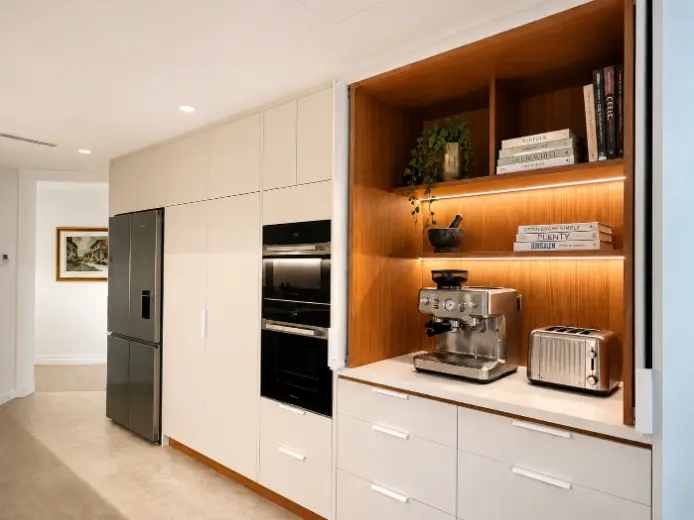
If a butler’s pantry isn’t possible, an appliance or breakfast cupboard can be a wonderful alternative. It keeps the toaster, kettle and coffee machine within easy reach, but out of view when not in use. Be sure to plan for power in here! Upgrade your interior finishes for a more elevated every day experience.
5. Layer your kitchen lighting
Good kitchen lighting is both practical and atmospheric.
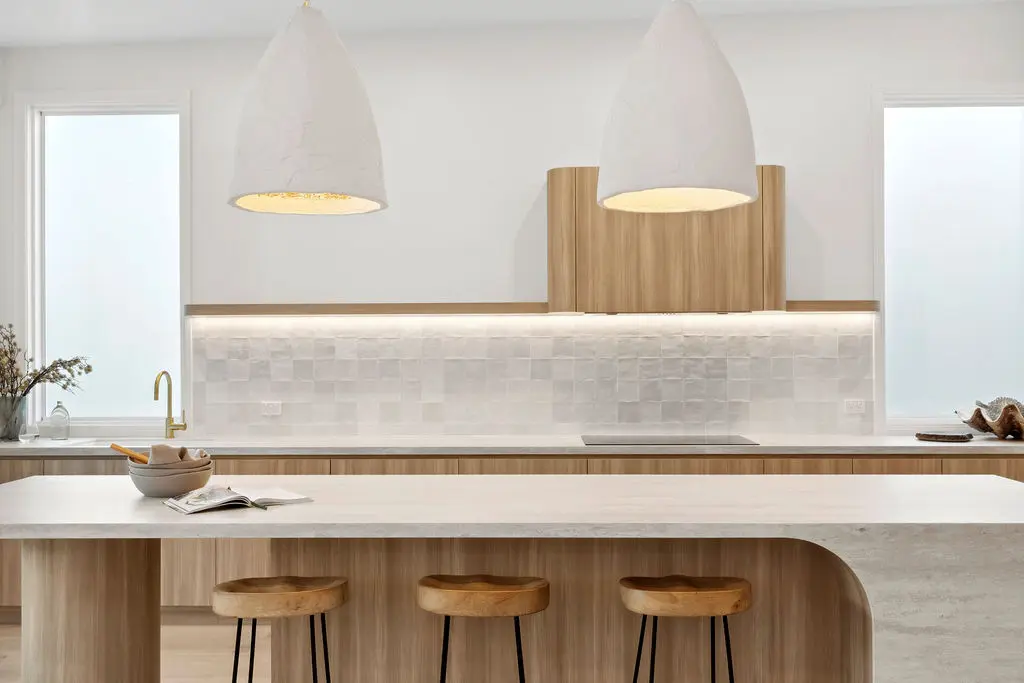
A kitchen needs clear task lighting for cooking and preparation, but it also needs softer lighting to feel warm and inviting, especially in open plan homes where the kitchen connects to the living and dining areas.
Consider a combination of:
- Dimmable overhead lighting
- Under-cabinet lighting
- Dimmable pendant lights over an island or peninsula
- Recessed lighting in open shelves
- Decorative wall lights where appropriate
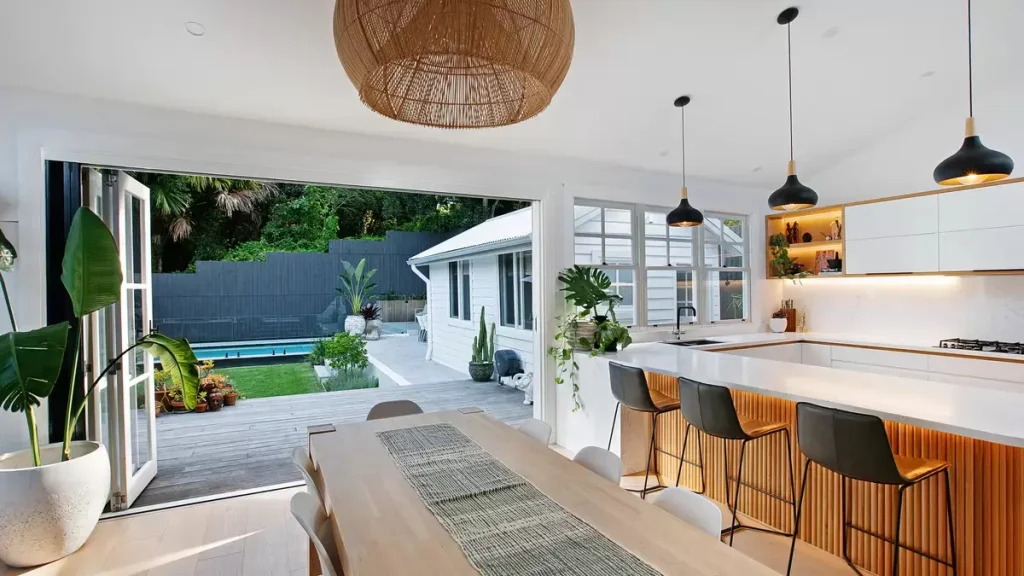
Open shelves with recessed lighting can add a lovely decorative layer, especially when styled with greenery, ceramics or meaningful objects. This helps the kitchen feel less like a purely functional zone and more like part of the living space.
6. Invest in the right kitchen appliances
High-quality appliances can dramatically improve the way your kitchen functions.
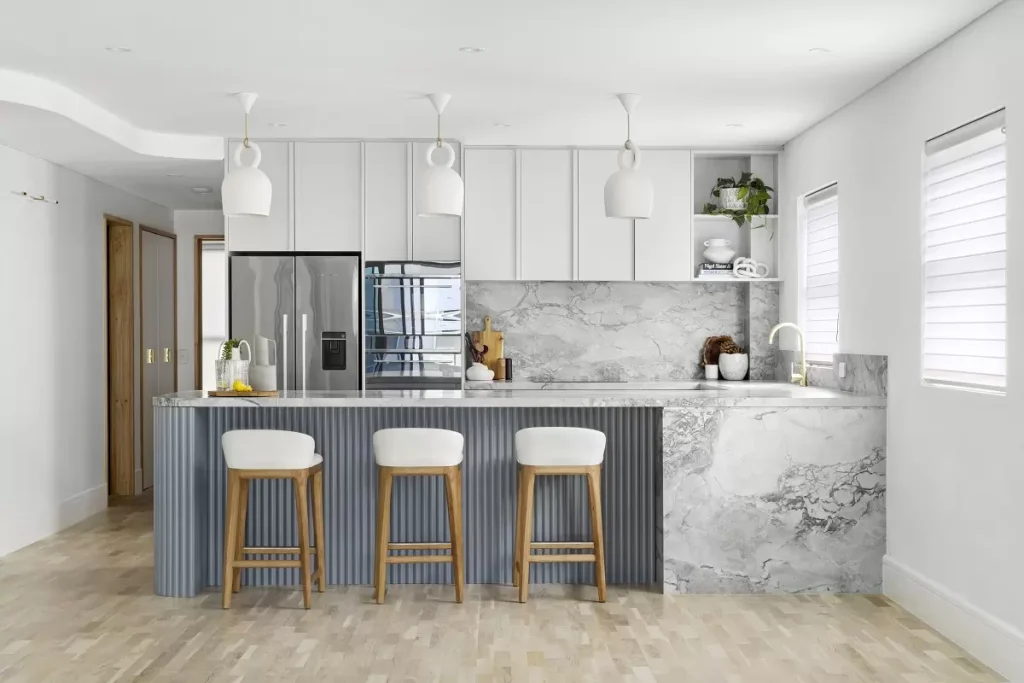
Think carefully about how you cook, entertain and use the space day to day. An induction cooktop, a dishwasher with a delay start function, or a fridge with an integrated ice maker may make life easier, depending on your household.
Size matters too and especially when it comes to your fridge and freezer. A family of five will need very different storage to a couple who eats out regularly or entertains on weekends.
Always check warranties, energy efficiency and dimensions before locking anything in. Appliance choices affect cabinetry planning, so they need to be decided early in the renovation process.
7. Choose a backsplash that suits the whole kitchen
A backsplash protects your walls from splatters and spills, but it also plays a big role in the overall look of your kitchen.
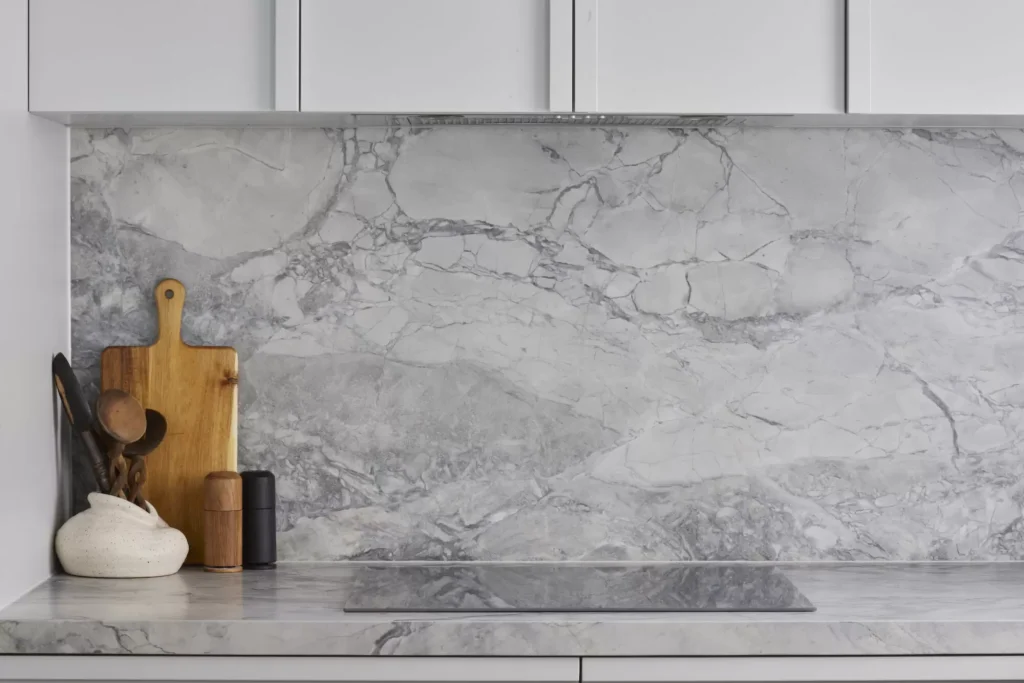
Tiles and stone are often the most popular choices. A continuation of the benchtop up the wall can create a refined, seamless effect, while tiles can bring texture, colour or pattern.
For a calm and understated kitchen, a soft neutral tile or lightly veined stone can work beautifully. For more visual interest, a textured handmade tile may add warmth and movement without feeling too busy.
If you’re concerned about grout lines, consider a 150mm high upstand in stone with tiles above.
The key is to make sure your backsplash works with the benchtop, cabinetry and flooring, not just as a feature on its own.
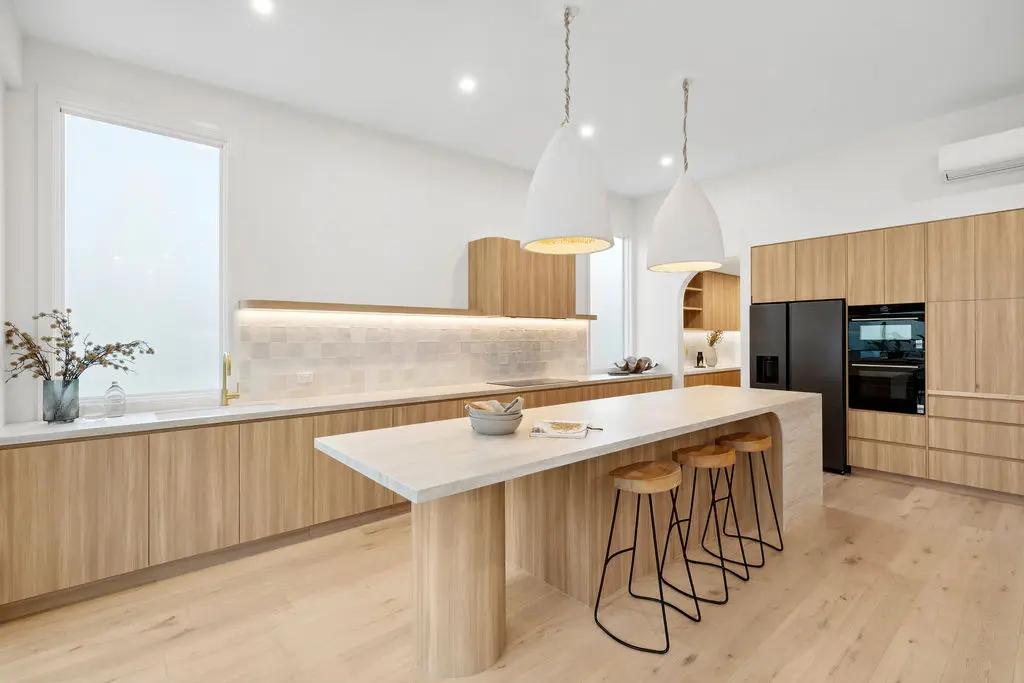
8. Consider whether a kitchen island is right for your space
If your floor plan allows it, a kitchen island can add storage, preparation space and a natural gathering point.
The fascia of the island also offers an opportunity to introduce colour, texture or a slightly different finish from the rest of the cabinetry. Like your benchtop and backsplash, it becomes a key part of the overall aesthetic.
You may choose to add a sink or cooktop to the island for extra functionality. However, be mindful of how you actually live. A sink in the island can mean dishes are always on display, which may not be ideal if the island faces the living or dining area.
Personally, if space permits, I like to keep an island or peninsula clear. It creates an uncluttered surface for casual meals, homework, entertaining, or pre-dinner drinks with friends.
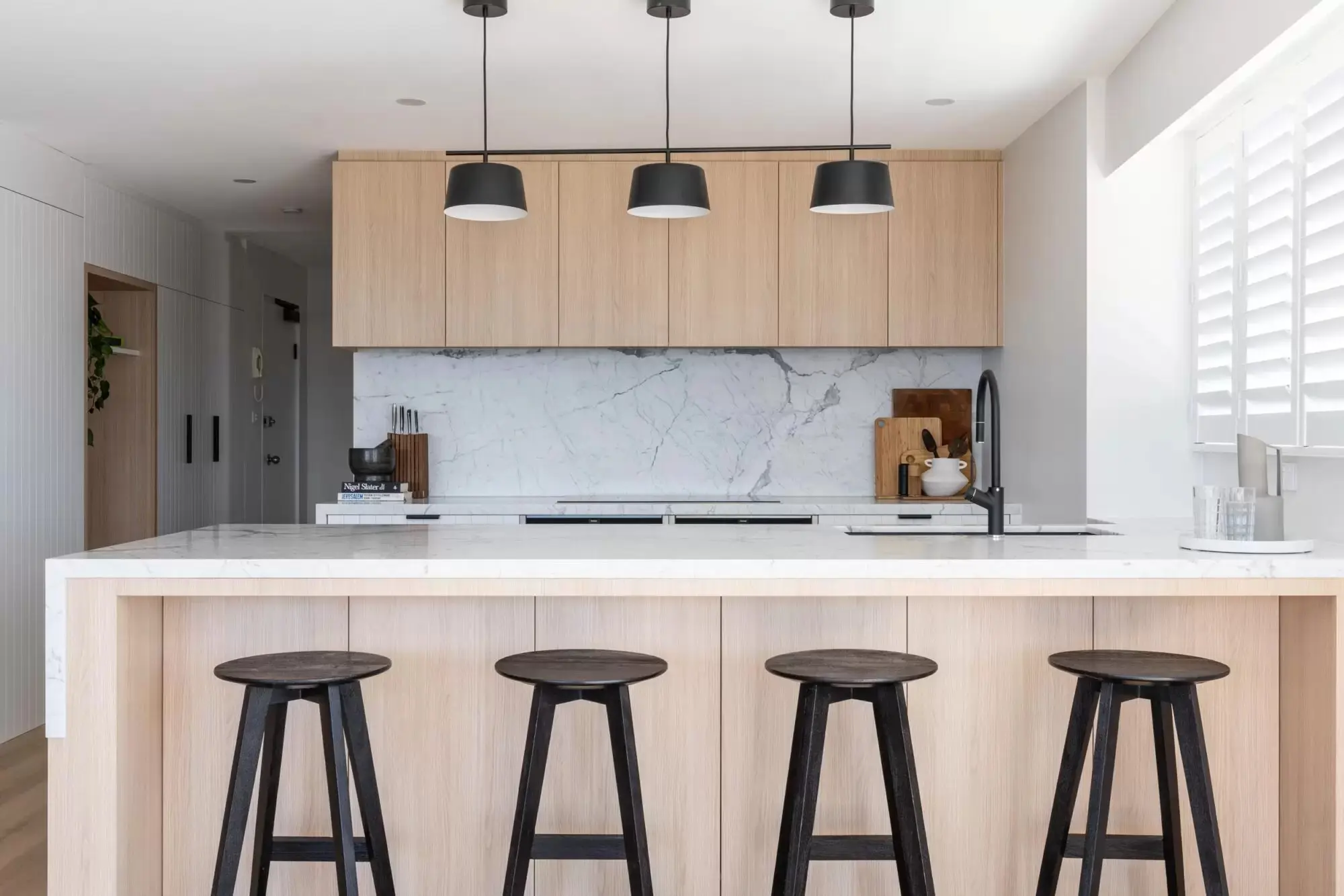
9. Design your kitchen around ergonomics
A kitchen should be comfortable and easy to use.
Benchtop height, cabinetry access and appliance placement all matter. As a general guide, I often specify 920mm from finished floor level to the top of the benchtop. For taller clients, 950mm can feel more comfortable, while 900mm may suit shorter clients.
Think about how often you bend, reach, lift and move around the kitchen. Everyday items should be easy to access, heavy appliances should not be stored too high, and frequently used drawers should sit where you naturally need them.
We don’t need to be breaking our backs every time we make dinner!
If space allows, a breakfast nook or comfortable seating area can also make the kitchen feel more inviting and connected to family life.
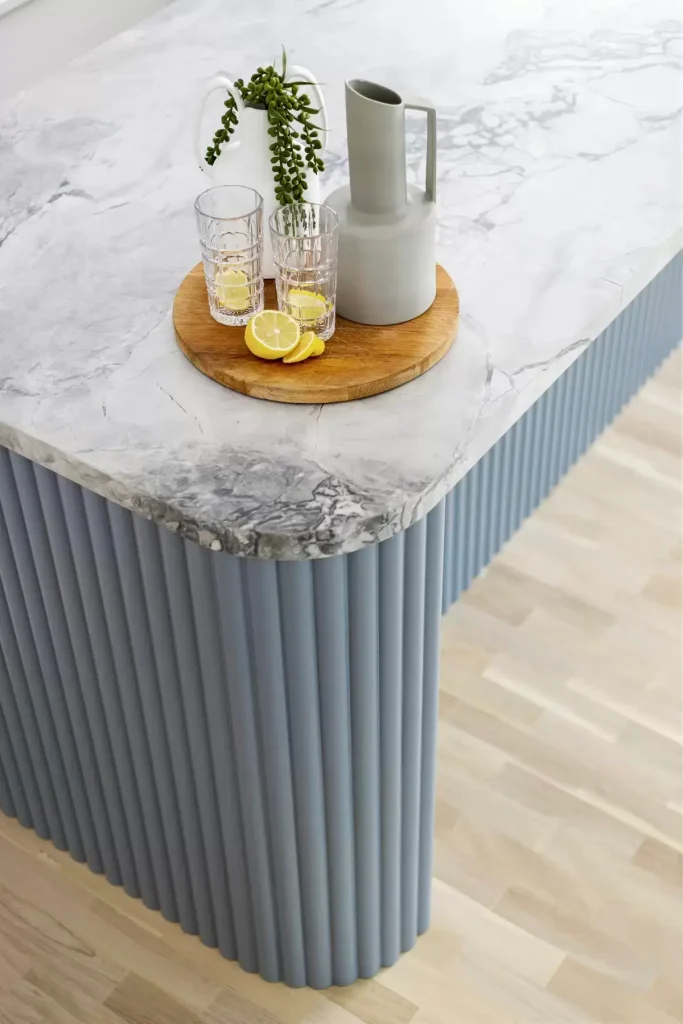
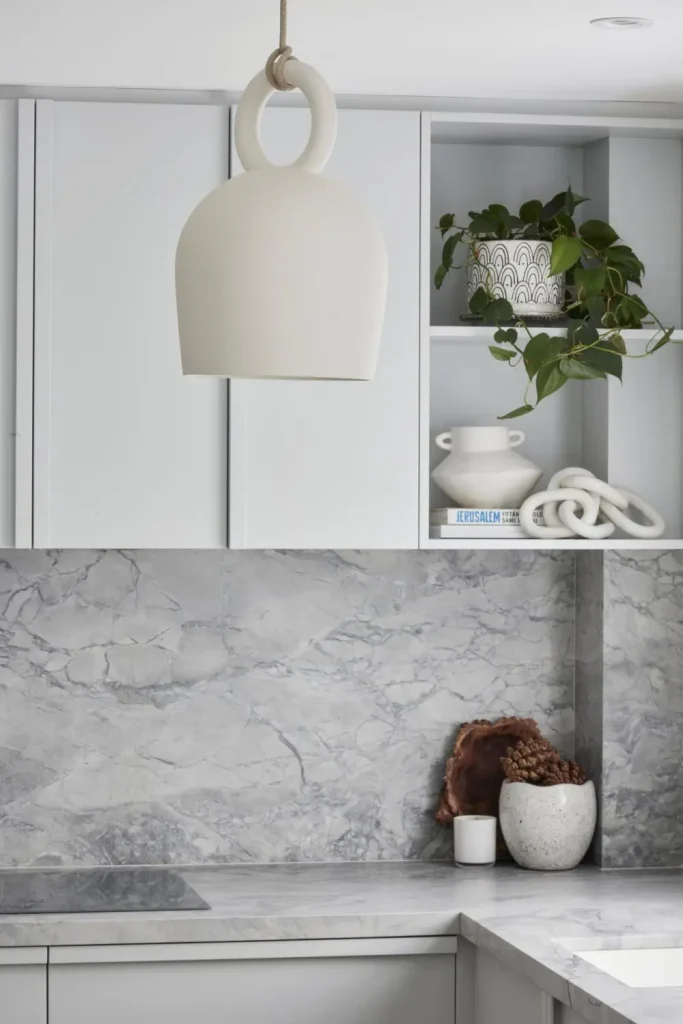
10. Create a cohesive kitchen aesthetic
Your kitchen should feel connected to the rest of your home.
Choose a consistent colour palette that reflects your interior style and creates a calm foundation. Repeating key finishes such as cabinetry colours, hardware, stone, timber or metal accents helps create rhythm and flow from one room to the next.
This is especially important in open plan homes, where the kitchen is visible from the living and dining areas.
A kitchen is just as much a living space as any other room, so don’t forget the personal touches. Artwork, decorative accessories, ceramics, greenery and treasured objects can help soften the space and make it feel like home.
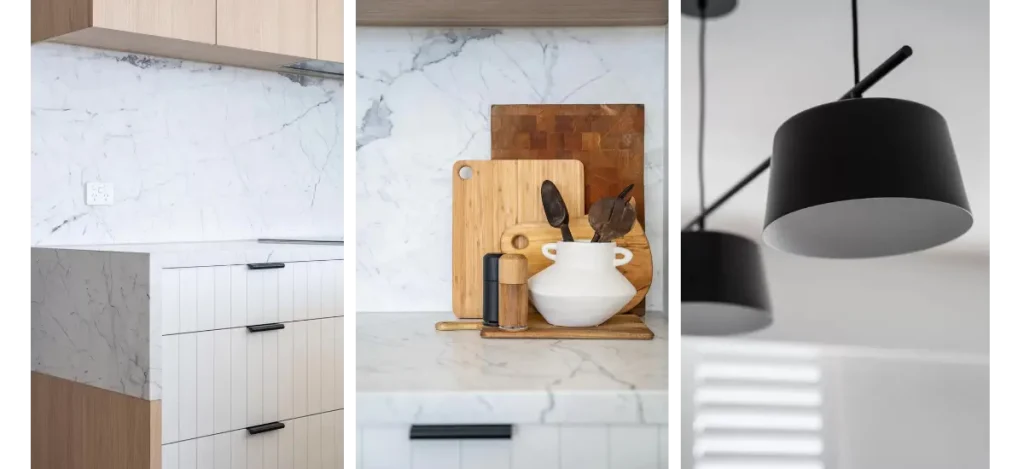
11. Don’t forget the kitchen details
Small details can make a big difference in a kitchen renovation.
Cabinet handles, tapware, lighting fixtures, power point locations, drawer inserts and accessories all affect the finished result. These choices may seem minor, but they’re often the details that make a kitchen feel carefully considered.
A beautiful pendant light, unique cabinet hardware, or thoughtfully styled open shelf can add personality without overwhelming the design.
The aim is not to create a kitchen that feels showy. It’s to create one that feels resolved, practical and genuinely enjoyable to live in.
Frequently asked questions about planning a kitchen renovation
What is the first thing to do when planning a kitchen renovation?
The first step is to understand how you want the kitchen to function. Before choosing finishes, think about your layout, storage needs, appliances, cooking habits and how the kitchen connects to the rest of your home. Once the practical foundations are clear, the aesthetic decisions become much easier.
What makes a kitchen layout work well?
A good kitchen layout supports easy movement between the sink, cooktop, fridge, preparation areas and storage. It should reduce unnecessary steps, keep everyday items close to where they’re used, and allow more than one person to move through the space comfortably.
How do I choose the right materials for a kitchen?
Choose kitchen materials based on durability, maintenance, lifestyle and the overall look you want to achieve. Natural stone, engineered stone, timber, laminate, porcelain and solid surfaces all have different strengths. The best choice is the one that suits both your style and the way you live.
Is a kitchen island always a good idea?
A kitchen island can be a wonderful addition, but only if the space allows for comfortable circulation around it. If an island makes the kitchen feel cramped, a peninsula or better storage planning may be a smarter option.
How much storage should a kitchen have?
A kitchen should have enough storage for everyday cookware, pantry items, appliances, crockery, glassware, bins and cleaning products – without cluttering the benchtops. Custom joinery can make a significant difference because it allows storage to be designed around your specific household.
Why work with an interior designer for a kitchen renovation?
An interior designer looks at the kitchen as part of the whole home. They help plan the layout, materials, finishes, lighting, joinery and overall aesthetic so the space works practically and feels cohesive. For larger renovations, a designer will help reduce decision fatigue and make the process clearer from the beginning.
Do you design kitchens on Sydney’s Northern Beaches?
Yes. Orli Interiors works with homeowners across the Northern Beaches and greater Sydney, helping create kitchens that feel beautiful, practical and connected to the rest of the home.
Planning a kitchen renovation on the Northern Beaches?
If you’re struggling to figure it all out and you’re looking for a Northern Beaches kitchen designer to help you create a kitchen that feels calm, practical and beautifully resolved, please do drop us a line.
We’d love to help.